Offshore wind-power components operate under extremely harsh service conditions including high salt-spray corrosion, high-humidity atmosphere and repeated cyclic alternating loads, with mandatory design service life exceeding 25 years. Unrelieved welding stress, uneven grain structure and mismatched surface-core mechanical properties will give rise to early fatigue crack initiation, progressive crack propagation and premature component failure, which brings huge safety risks and high replacement costs. Heat-treatment furnaces act as critical process equipment to eliminate these risks and secure long-term operational reliability for these large-scale, heavy-duty wind-power parts.
Large structural workpieces such as tower sections and flanges contain long-run welding seams. Welding processes introduce high-magnitude residual tensile stress. Without furnace-based post-weld annealing or normalizing, residual stress will combine with cyclic wind-load stress to trigger fatigue cracks during decades-long field operation. After being loaded into heat-treatment furnaces and undergoing controlled thermal cycles, welding residual stress is substantially reduced. The furnace avoids stress-related cracking and delays fatigue degradation for large welded wind-power structures.
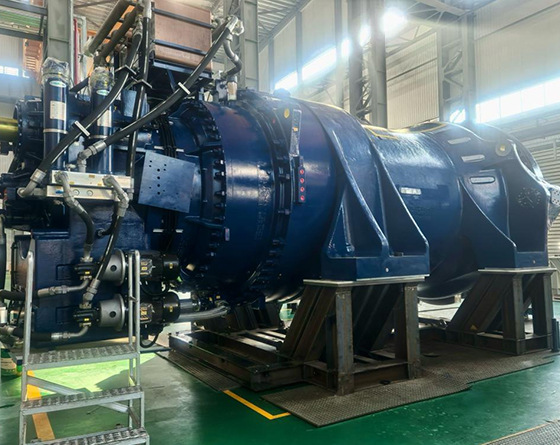
Core transmission components including gearboxes, main shafts and bearings require the distinctive “hard surface and tough core” property: wear-resistant hard surface bears continuous friction, while a tough inner matrix absorbs sudden impact loads. Without precise furnace heat treatment, parts either suffer rapid surface abrasion or brittle core fracture under shock loads. Heat-treatment furnaces achieve this differentiated performance by implementing quenching-and-tempering and carburizing-nitriding. Furnace temperature, holding duration and protective atmosphere are strictly tuned to modify surface and internal microstructure separately.
Major processed workpieces cover gearboxes, main shafts, bearings, tower cylinders and flanges. Furnace-conducted heat treatment releases harmful internal stress, refines grain structures and optimizes comprehensive mechanical properties, ensuring wind-power components satisfy stringent long-term offshore operating requirements.

Copyright © Henan Tianli Thermal Equipment Co., Ltd. Power by yisainuo